Patching, live process monitoring, and detecting attacks on a device · Approx. 2 class days
StarringSignature-Based vs. Behavior-Based Detection
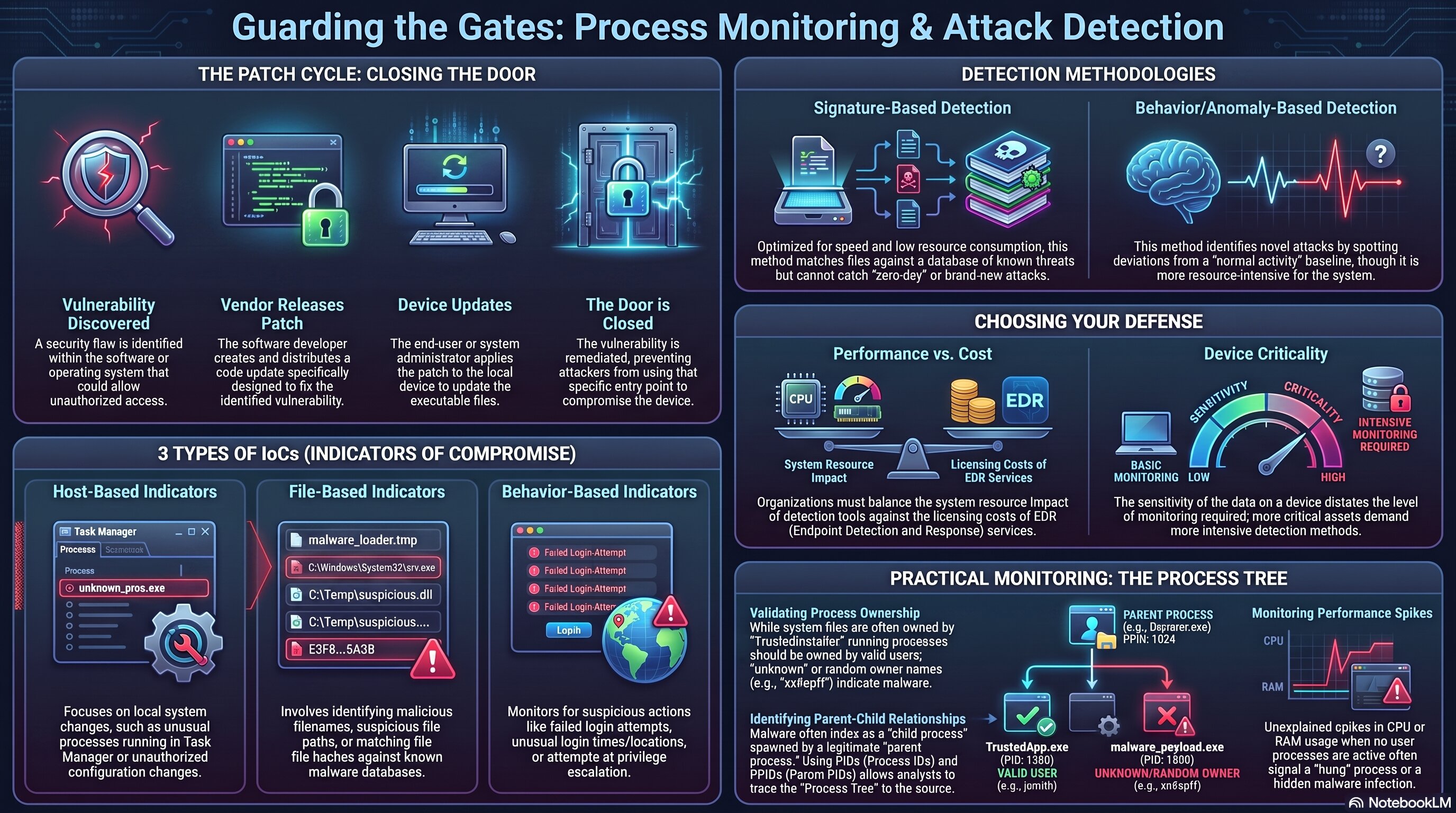
Use this as a quick reference for the patch cycle, detection method comparison, IoC types, and detection method criteria.
🧭 Plot Summary
Everything you've done so far has been about static defenses — locking things down before anything happens. This activity is where you start watching a live system. You'll open up process monitoring tools on the PLTW virtual server and actually look at what's running right now — which is exactly where a lot of real intrusions get caught.
You'll also compare the two fundamentally different ways detection tools work:
Signature-Based
Matches known malware patterns — fast, low resource use, but blind to brand-new attacks
Behavior-Based
Flags deviations from a normal baseline — catches novel attacks, but uses more resources
What you will do in this lesson
Explore process monitoring tools on the PLTW virtual server to see what's actually running.
Learn why patches matter and what happens to a device that falls behind on updates.
Compare signature-based detection to behavior-based detection.
Practice spotting indicators of compromise across three categories: host, file, and behavior.
Weigh the real tradeoffs — performance cost, licensing cost, and device sensitivity — in choosing a detection method.
Why it matters
Patching and passive defenses only get you so far. Sooner or later, something slips through — and this is where you learn to actually notice when it does.
✅ Self-Check Before You Roll On
Check off each item as you get there. These are not grades — they are your own signal.