CSRF, secure by design, and input sanitization as a universal defense · Approx. 2 class days
StarringXSS: Trust in a User · CSRF: Trust in a Site
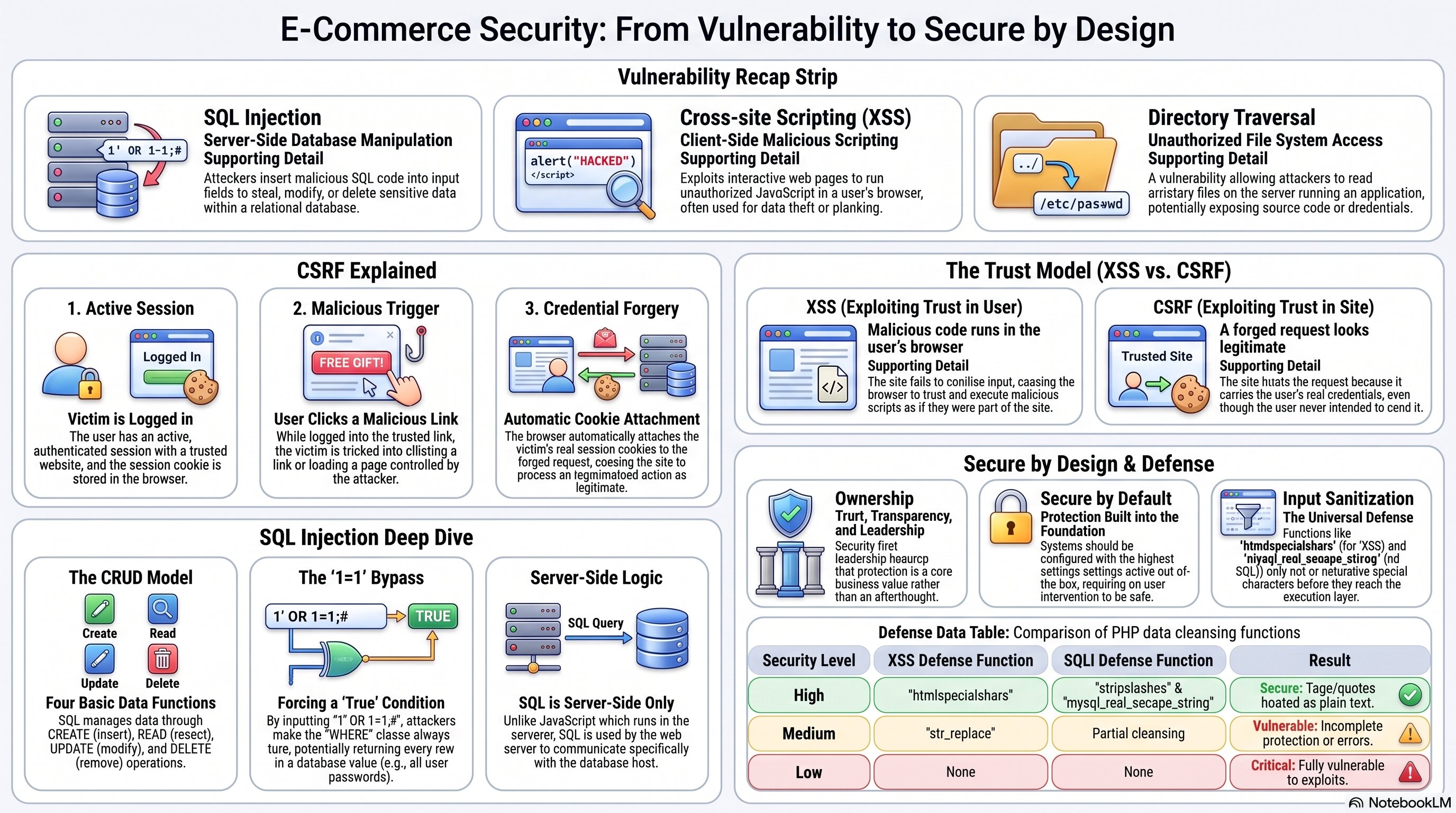
Use this as a quick reference for the recap attacks, CSRF, secure by design, and input sanitization.
🧭 Plot Summary
You already know SQL injection, XSS, and directory traversal from 2.2.2. This activity applies them to a real e-commerce security lab, then adds one more attack that works completely differently:
CSRF (cross-site request forgery) tricks an already logged-in victim's browser into sending a request the victim never intended — exploiting the site's trust in that browser session, rather than tricking the person directly.
You'll close by learning secure by design and input sanitization — the design philosophy and the single technique that, together, prevent most of the attacks in this activity from working in the first place.
What you will do in this lesson
Apply what you know about SQL injection, XSS, and directory traversal to a real e-commerce security lab.
Learn CSRF — an attack that exploits a site's trust in an already-logged-in user's browser.
Study secure by design and secure by default as company-level security principles.
Learn why input sanitization is a single defense that blocks three different attacks at once.
Why it matters
This is where attack and defense finally converge — you now have both the attacks and the design principles that stop them, right before this section's capstone problem.
✅ Self-Check Before You Roll On
Check off each item as you get there. These are not grades — they are your own signal.